AI writing usually gets called out for its rhythm and structure, not its word choice — the same three-part lists, the same hedge-then-hedge-again sentences, the same “in conclusion” wrap-up. These prompts target the actual tell.
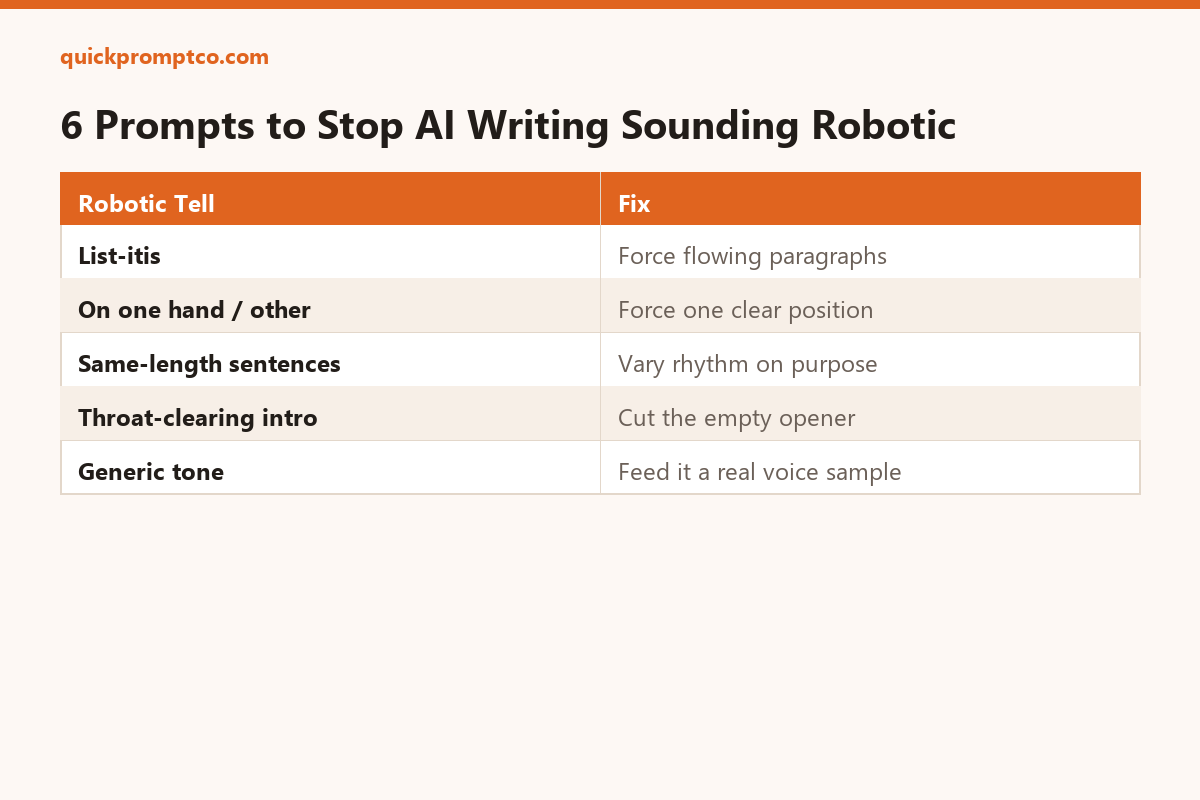
1. Ban the list-itis
Rewrite this as flowing paragraphs, not bullet points or numbered lists, unless a list is genuinely the clearest way to present it: [paste text]
2. Force one clear position instead of “on one hand, on the other”
Take a clear position on this instead of presenting both sides equally. State your actual recommendation in the first sentence: [paste topic]
3. Vary sentence length on purpose
Rewrite this so sentence length varies noticeably — mix short, punchy sentences with longer ones. Avoid every sentence being roughly the same length: [paste text]
4. Cut the throat-clearing opener
Delete any opening sentence that doesn't contain new information (e.g. "In today's fast-paced world..."). Start with the actual point: [paste text]
5. Feed it a sample of your real voice
Here's a sample of how I actually write: [paste your own text]. Match this tone, sentence rhythm, and vocabulary level when you rewrite the following: [paste text to rewrite]
6. Run the read-aloud test
Read this out loud in your head. Flag any sentence that a real person wouldn't naturally say out loud, and rewrite just those: [paste text]
Why this works
None of these change vocabulary — they change structure and rhythm, which is what actually reads as “AI-written” to most people, far more than any individual word choice does.
Leave a Reply